Safety equipment gets sold as a shopping list. In practice, the homes that are genuinely well protected are not the ones with the most devices — they are the ones where everyone in the household understands what to do. Here is a calm, practical way to think about security and fire safety together.
Safety is a household habit, not a gadget
Two things decide how well a safety plan works: whether the equipment is in the right place, and whether the people living there know how to respond. A camera nobody can operate is decoration. An alarm nobody hears is worse, because it creates false confidence.
So begin with a walkthrough of the property as a family. Every room, every level, every exit — and ask honestly what would happen if something went wrong at night.
Fire safety: detection, equipment, and a route out
Detection
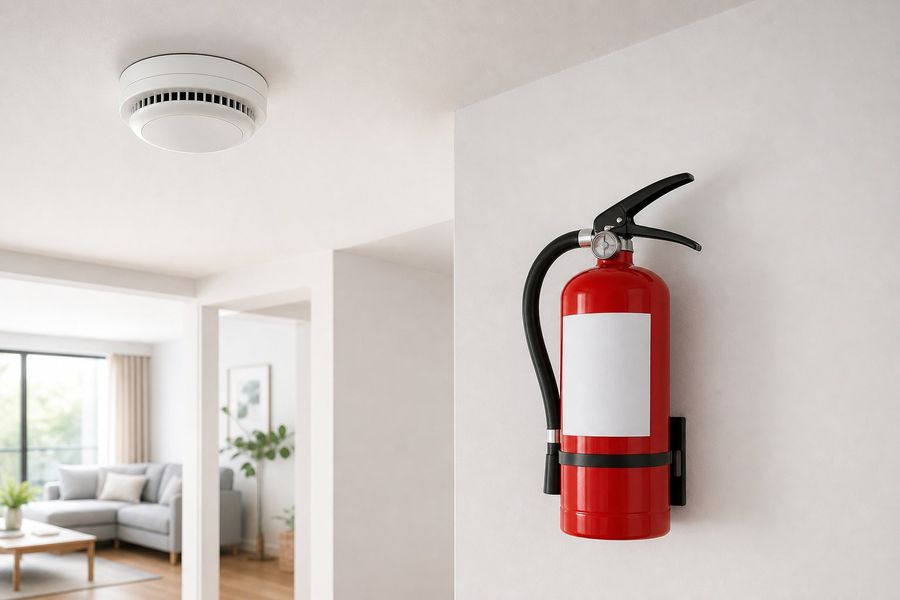
Smoke and heat alarms should cover every level of the home, the area outside sleeping rooms, and the rooms themselves. Kitchens need a heat alarm rather than a smoke alarm, because cooking regularly sets smoke alarms off — and an alarm that goes off by mistake is an alarm that gets disabled.
Equipment
- An extinguisher on each level, sited near an exit route rather than beside the appliance it protects.
- A fire blanket in the kitchen, mounted within easy reach of the hob.
- Alarms checked at the same time each season — a habit beats a reminder.
A route out
Walk the escape route with everyone in the home, in the dark, at least once. Agree where you would meet outside, and make sure the windows and doors on that route actually open. Children should know they can wake an adult rather than investigate a noise themselves.
The most useful safety upgrade we install is not a device. It is the walkthrough at the end, when the household learns what everything does.
Security: light, sightlines, doors, then cameras
Lighting
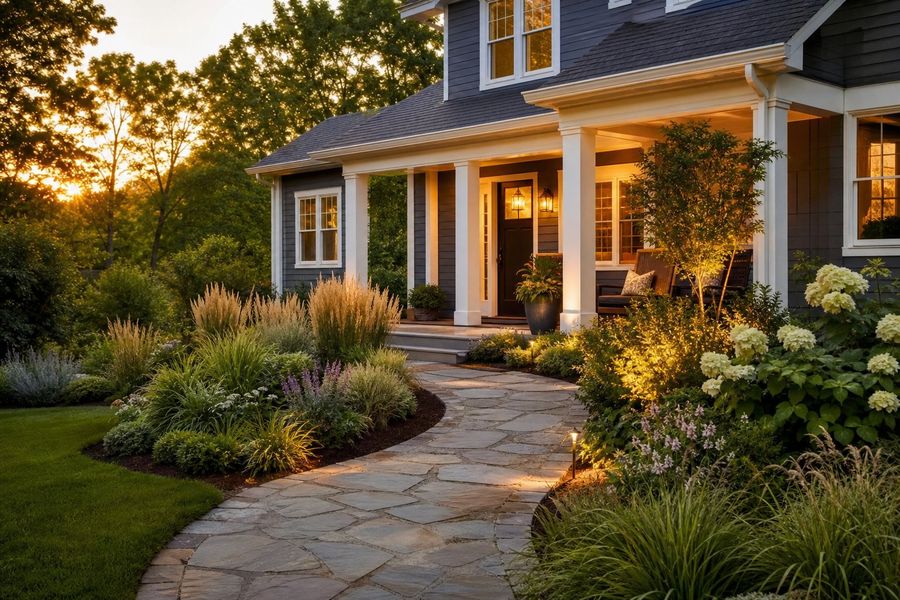
Well-placed exterior lighting removes the dark corners someone would use to work unnoticed. Lighting that switches on with movement at entrances and along side paths is usually more effective than brighter light everywhere.
Sightlines and landscaping
Shrubs and trees that hide a ground-floor window also hide an approach. Keeping the lower part of planting clear does more for security than most hardware. At the same time, avoid leaving ladders, bins or furniture that could be stacked or used to reach an upper floor.
Doors and windows
Solid doors, sound frames and reliable locks remain the foundation. Where an older door or frame has moved with the seasons, adjustment or replacement may be needed before adding smart hardware on top of it.
Cameras and sensors
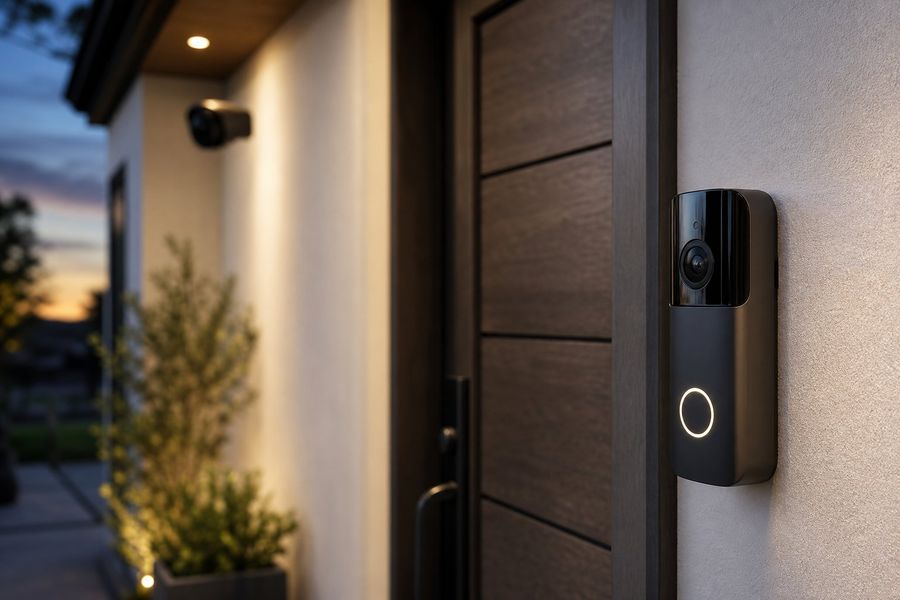
Install cameras where they answer a real question — the front approach, the rear entrance, the side gate — and angle them to capture identification, not sky. A video doorbell is most useful when it can see a visitor’s face and the parcel left at the step. Sensors on doors and windows are simple and quietly effective.
Keep it simple enough to be used
- One place to control everything — a single app or panel, not four.
- Named responsibilities — who checks the alarms, who reviews the cameras.
- Guest-friendly — anyone staying over should be able to arm and disarm without a manual.
- Battery and connection awareness — know what runs on mains, what runs on batteries, and what happens in a power cut.
Renovating? Plan safety in.
If you are already opening walls, replacing windows or reworking a kitchen, safety improvements cost far less to include now than to retrofit later. Alarm cabling, camera positions, exterior lighting circuits and secure door hardware can all be part of the same project — and the finishing is neater too.
Review it every season
Walk the property at the change of each season. Test the alarms, look at the exterior lighting as the evenings lengthen, check the escape route is still clear, and confirm that everyone who lives there still remembers the plan. Safety at home is not a purchase you make once. It is a habit you keep.
If any of these look like the next job on your list, request the service and we will be in touch to arrange a walkthrough.